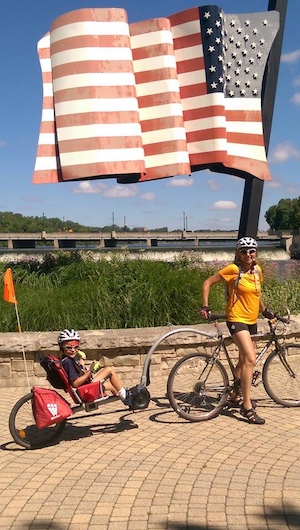

As many prepare for the 250th Anniversary of the United States of America, we may wonder how our Fox River Valley developed from a wild land up to July 4th, 1776 and the next 250 years to today.
Backstory
As the climate warmed, the melting glaciers receded to form our watershed’s current landscape. 17,000 years ago, a morainal wall of a glacial lake just below the current Chain O’ Lakes collapsed. What is referred to as the Great Fox River Torrent roared downstream carving the valley. The glacial actions and that event really are our land’s contemporary origin. From that blank canvas the flora and fauna entered to create our current ecosystems. Today, the Fox River Watershed is the home of many habitat types and dominates the existence of the state’s bogs, fens, and gravel hill prairies.
First People
It is important to recognize that we reside upon the unceded, traditional, and ancestral homelands of many Native Nations. Long before 250 years ago, they had been using the river as a transportation corridor while meandering their. way in and out of the watershed, enjoying the rich resources for food, materials, shelter. Their mostly harmonious relationship with the land made for a thriving and sustainable existence. That chapter is more than 8000 years in the making.
The French Influence
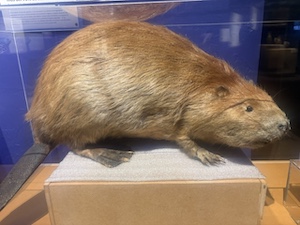
As European explorers wandered about the earth, they arrived on Turtle Island in the 1400s. They too found a resource-rich land that provided a commodity of animal hides and furs for folks in their homeland. The region was a vital waterway for early French fur traders and missionaries. By the late 1700s, trading posts were established. The French explorers Jacques Marquette and Louis Jolliet named the Fox River/River Des Renard (in Wisconsin) after the Meskwaki (Fox) people who lived in the territory at that time.
Army Tales
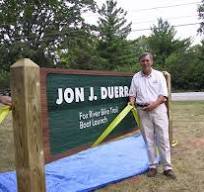
One of the earliest accounts was from 1823, when a U.S. Army exploring party from Pennsylvania crossed the Fox River 9 miles south of Dundee at the great bend now known as John Duerr Forest Preserve. It was described as “an easy to ford fine stream with a gravely bottom.” That trail became known as Army Trail Road. 11 years later, troops crossed to fight in the Blackhawk War. Their ranks included Abraham Lincoln, Jefferson Davis and the sons of Daniel Boone and Alexander Hamilton, and two other soldiers whose graves are in the preserve.
This Land is Your Land
The stories of highly fertile soil, vast timber, diverse wildlife and abundant water resources brought settlers to the eastern shore. Many came from other directions, but the east to west quest is what populated our watershed with permanent residents. As was the case 250 years ago, the expanding settlers saw the land as “free” for their occupation and consumption. Those who had resided here for several millennia began to be forced out. This is a very sad chapter in the watershed’s history, as it was the beginning of a colonial genocide, resource exploitation and degradation that have continued from that point forward.
Settlement
Most of the Fox River valley’s communities were established in the early 1830s. The region transitioned into a heavy manufacturing hub. Aurora and Elgin grew into major industrial powerhouses, producing everything from heavy machinery to watches, before many of these factories closed in the latter half of the 20th century. Dams were built to provide the source of power. The dam’s impoundments were important reservoirs for ice production for use locally and shipped to Chicago as crucial to the meat packing industry. A 30,000 square foot icehouse in Carpentersville was used exclusively for the Swift company and employed hundreds of workers in the winter months.
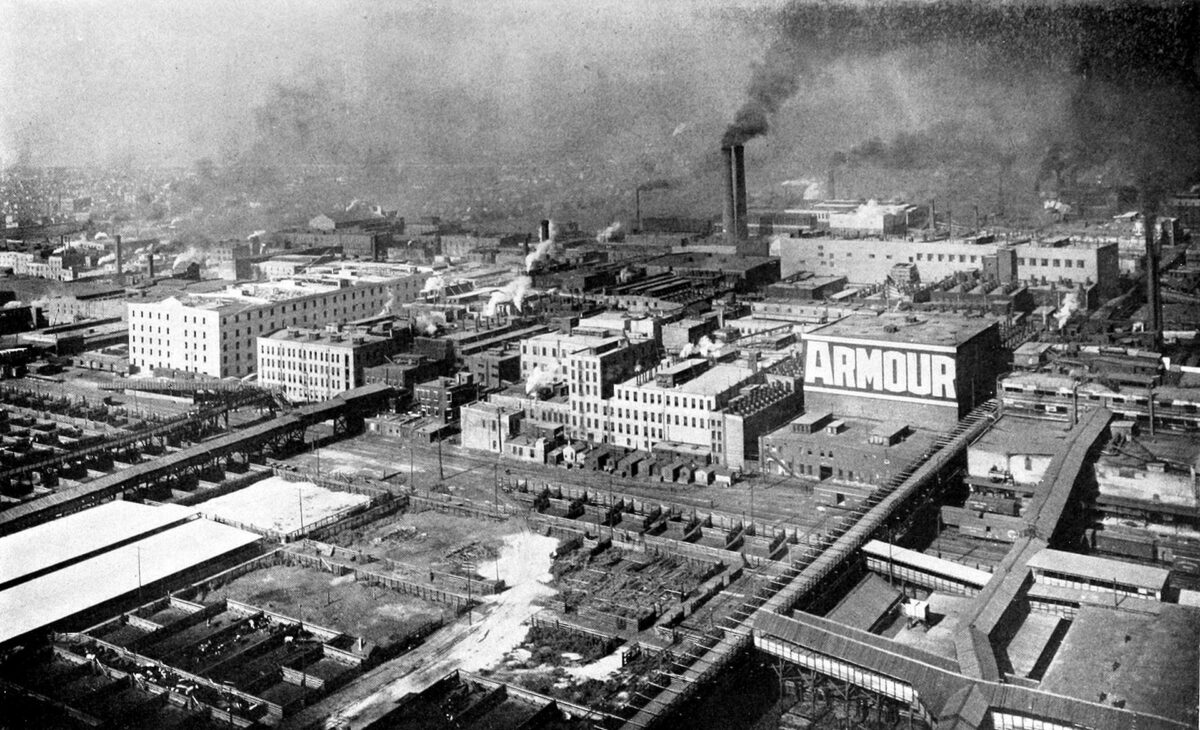
Industrial pollution of the era.
Loving It To Death
In the 1800s, the Fox River evolved into a bustling “sportsman’s paradise” and nature retreat for city dwellers. New railways brought visitors from Chicago. They came to escape the city, relax, and enjoy outdoor activities like hunting, fishing, and boating. By 1911, the State of Illinois Health Department had declared that human and industrial waste made the Fox River unsafe for consumption and communities began treatment and pursued wells as drinking water sources.
A “Clamity”
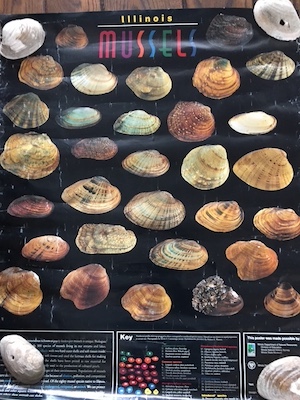
In 1916, the area was a clamming industry hub. Not for food but for buttons. The shells sold for $50/ton. The rich limestone deposits in the Carpentersville and Dundee area contributed to especially magnificent incandescent coloring that brought up to $125/ton. In addition to buttons was a short pearling craze. The largest pearl ever found in North America came from the Fox River near Sheridan. People would arrive by train on the weekend and hunt for pearls. A trolley line ran along the river from Carpentersville to Yorkville from the late 1800s until 1935. The freshwater mussel populations were soon decimated.
The FOX
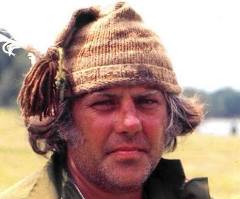
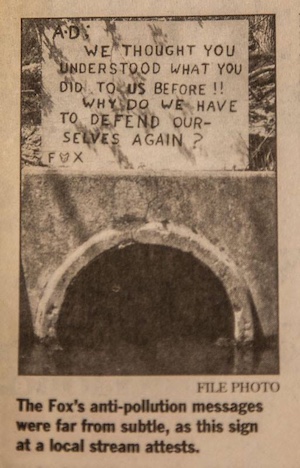
Anti-pollution laws were weak and poorly enforced. This impacted ecosystem health and tourism. In the mid 1960s, an anyomous individual decided to take action. Along with a cadre of “Kindred Spirits,” The FOX went on a series of raids upon local manufacturers. Outfall pipes were plugged so that they backed up, smoke stacks capped, and toxic effluent dumped in office floors from the companies that used the Fox River as their sewer. This brought grand public attention and growing concern for the fate of our river and its watershed. The FOX was a true patriot who successfully fought to protect the Fox River from pollution.
The Environmental Movement
In 1970, a suite of federal legislation was enacted that created the Environmental Protection Agency, Clean Air Act, Resource Recovery Act, Clean Water Act (CWA), and more. This established standards that were enforceable. Funding was available to build the infrastructure for compliance. From that point forward, local water quality consistently improved.

Development
Plowing the prairie and clearing forest lands has had devasting impacts upon local ecosystems, especially wetlands. Some counties that were 30% wetlands before settlement now are hanging on with single digit percentage. The agricultural land has steadily been converted to sprawling development, which has reduced natural infiltration and increased runoff. That non-point source pollution (urban and agricultural) is now the largest water quality threat.
Restoring
Thanks to land preservationists, and restoration efforts, the watershed is seeing encouraging recovery. Impressive actions abound like reestablishing native prairies and woodlands on public lands, naturalizing private landscapes, removing dams, and even bringing back the Bison. These are a patchwork but are having tangible impacts. All these action are a demonstration of a change in the human/land relationship that has been lost for 250 years. and is now being reestablished.
Celebrate
As you engage in the 250th Anniversary activities, take time to celebrate our roots of a watershed of abundance, the abuses and the efforts being made to restore and preserve the watershed.