
After more than two decades, the research is clear. Dam removal along the Fox River is the most effective, economical, and best way to rehabilitate water quality for our Fox River.
Scientific studies performed over the past decades have concluded dams and their impoundments result in widespread detrimental effects to warm shallow rivers. Our Fox has 12 dams between McHenry and Dayton on its main stem alone. Removal of these dams, whether on the main stem of the Fox or its tributary streams will help Fix the Fox River.
As a nation we have had the experience of removing nearly 2,000 dams from American rivers over the past 20+ years. Removing dams from formerly “working” rivers like our Fox that were constructed during the nineteenth and early twentieth centuries has resulted in improved water quality, better fishing and wildlife viewing, greatly expanded safety and access for fishers and boaters. There have been and will continue to be significant and substantial new local economic opportunities associated with a clear river having a clean bottom flowing through our valley.
Carpentersville Dam Removed
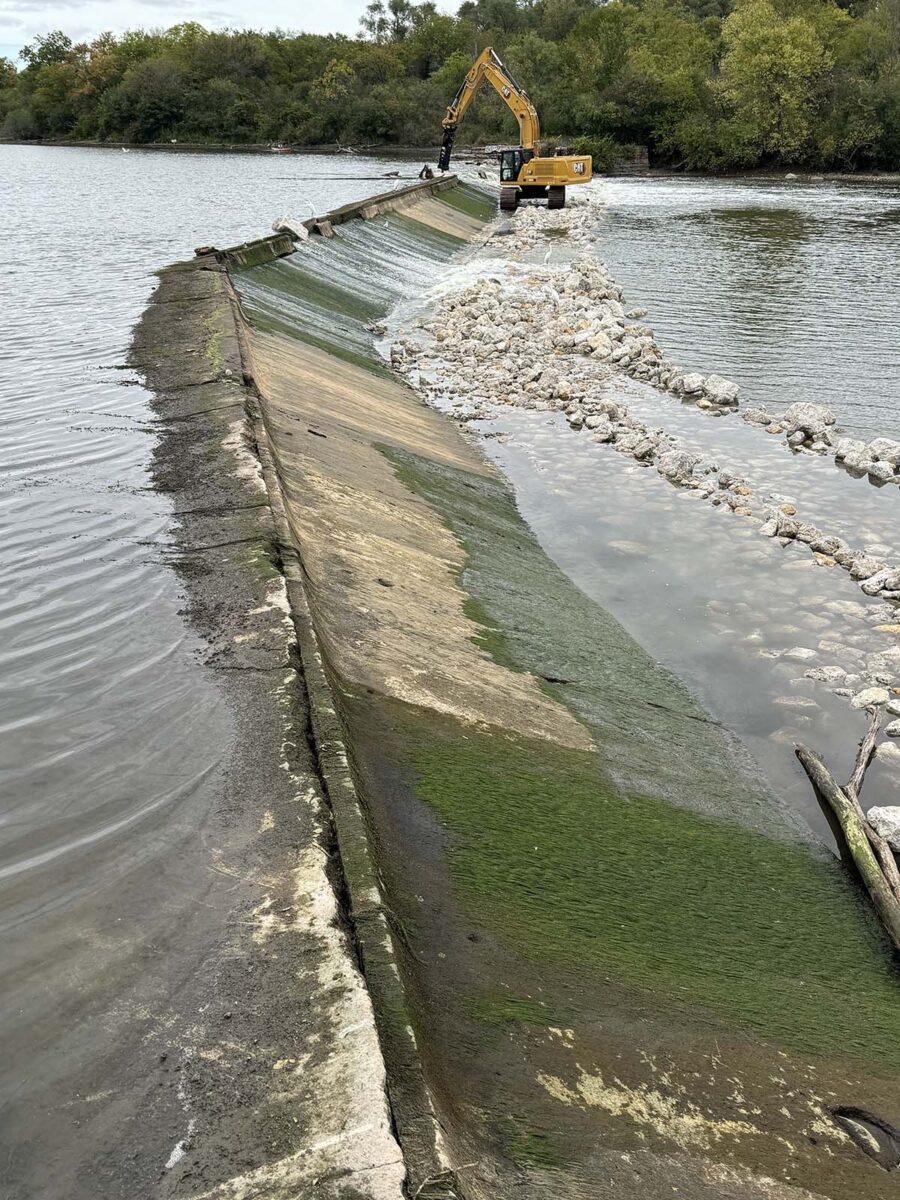
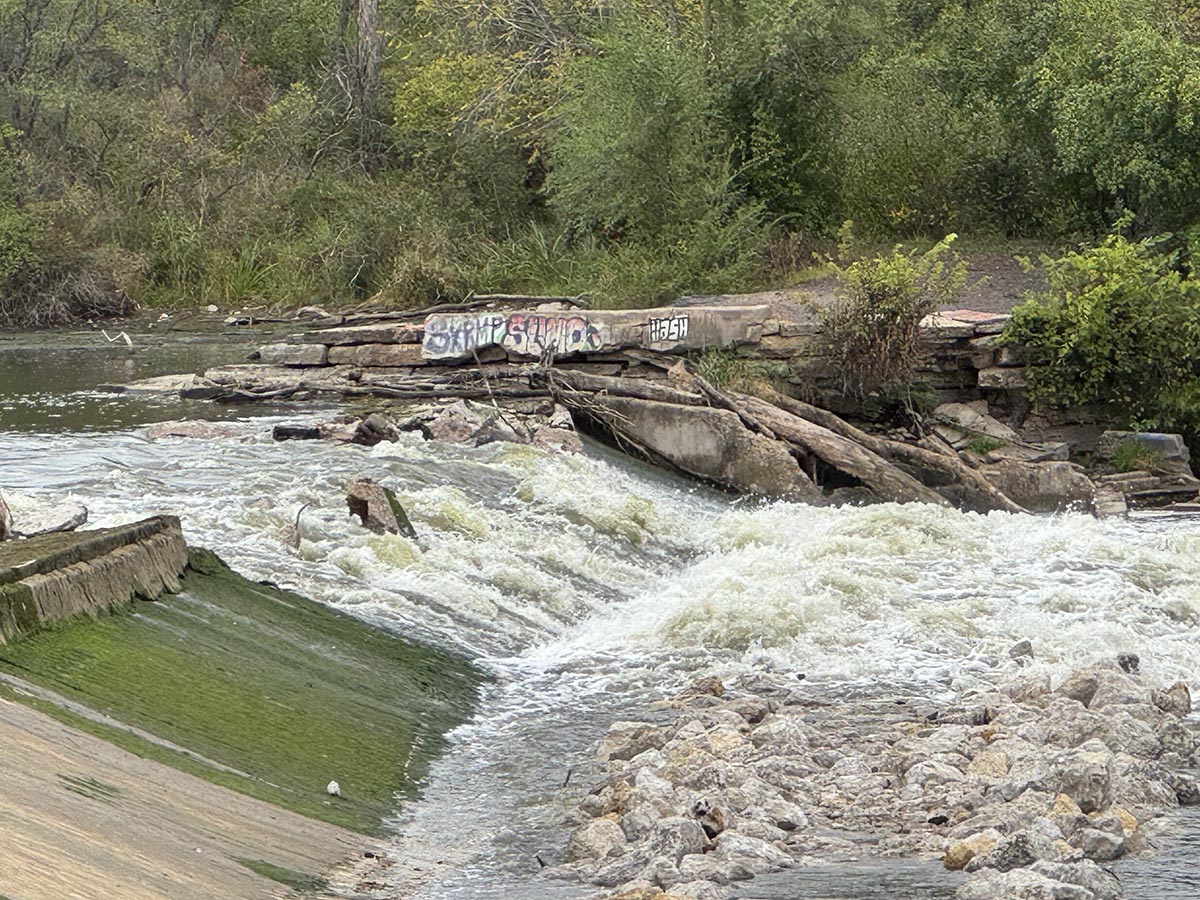
After 5 years in the planning, the removal of the Carpentersville dam is now a reality, and the Fox River is flowing freely from Algonquin to Elgin.
The Forest Preserve District of Kane County (KCFPD) and the Illinois Department of Natural Resources worked together to locally advance the state-wide dam removal initiative that focuses on removing the safety hazards created by low head dams and restoring Illinois’ natural resources.
According to the KCFPD, “Multiple state agencies and environmental interest groups have done various scientific studies that identify old low head dams as a primary contributor to significant adverse impacts on the safety, ecology and water quality for natural waterways like the Fox River. The studies also show that the river could be substantially improved if the deteriorating dams and their associated upstream impoundments were eliminated.”
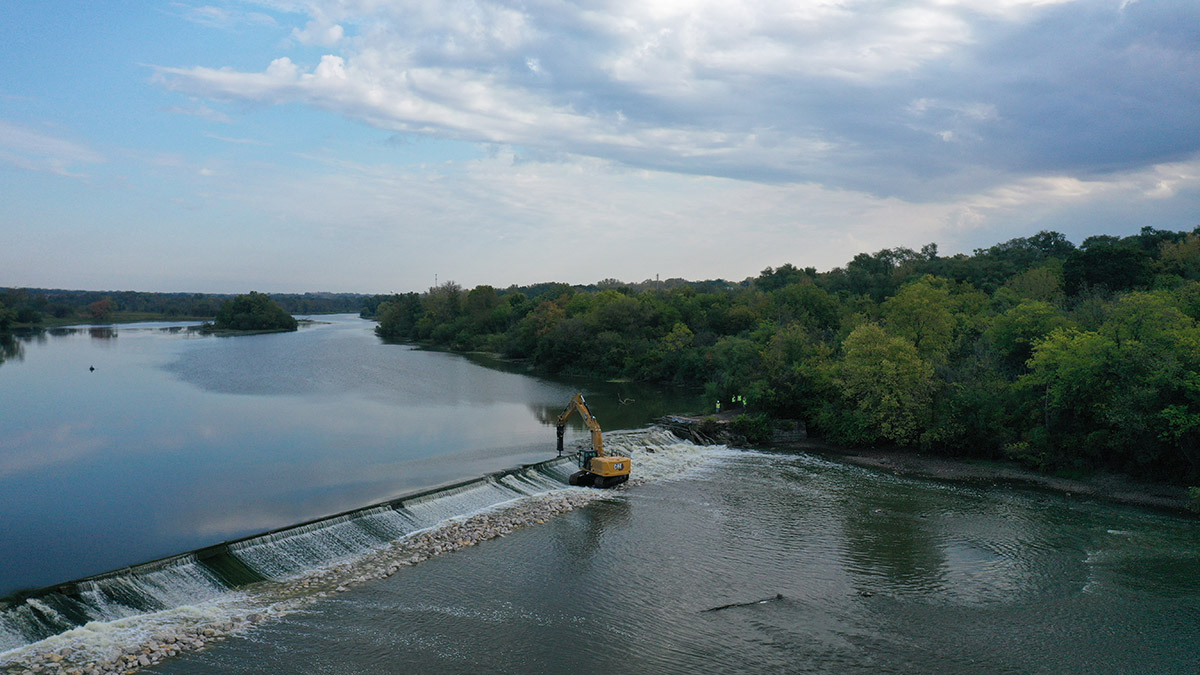
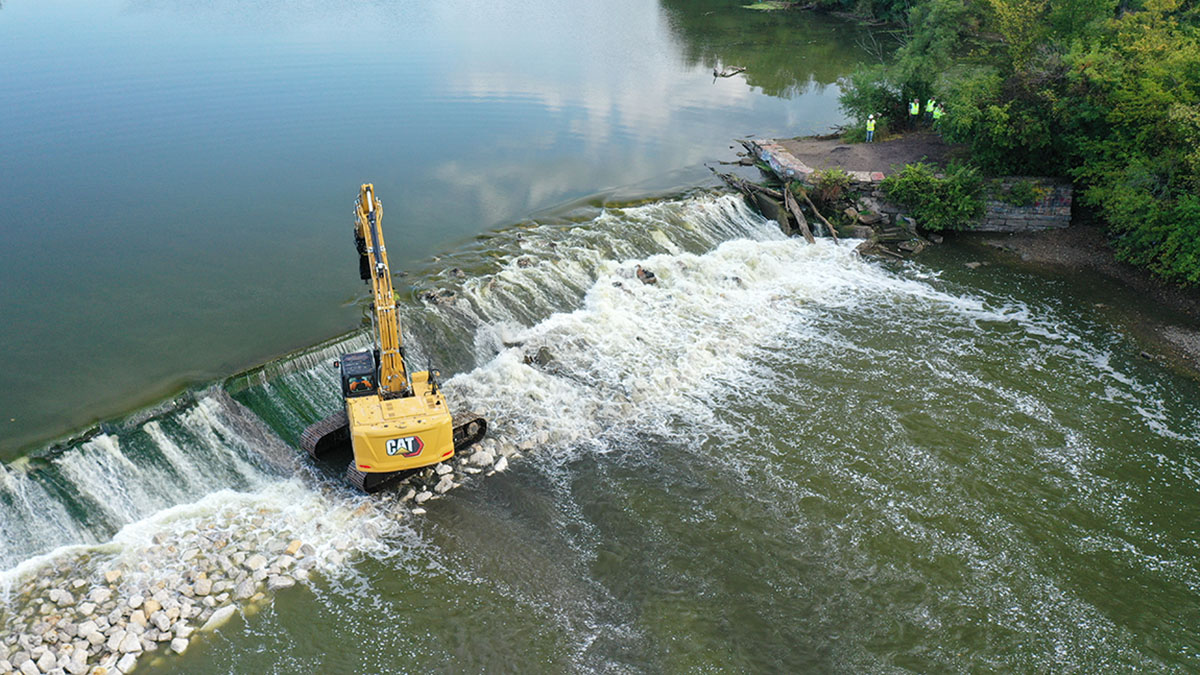
Crews began working on the $1.2 million project in Carpentersville in September and finished in November. Friends of the Fox River board member Art Malm takes a look at the history of the Carpentersville dam in an article published in Silent Sports magazine.
The transformation continues
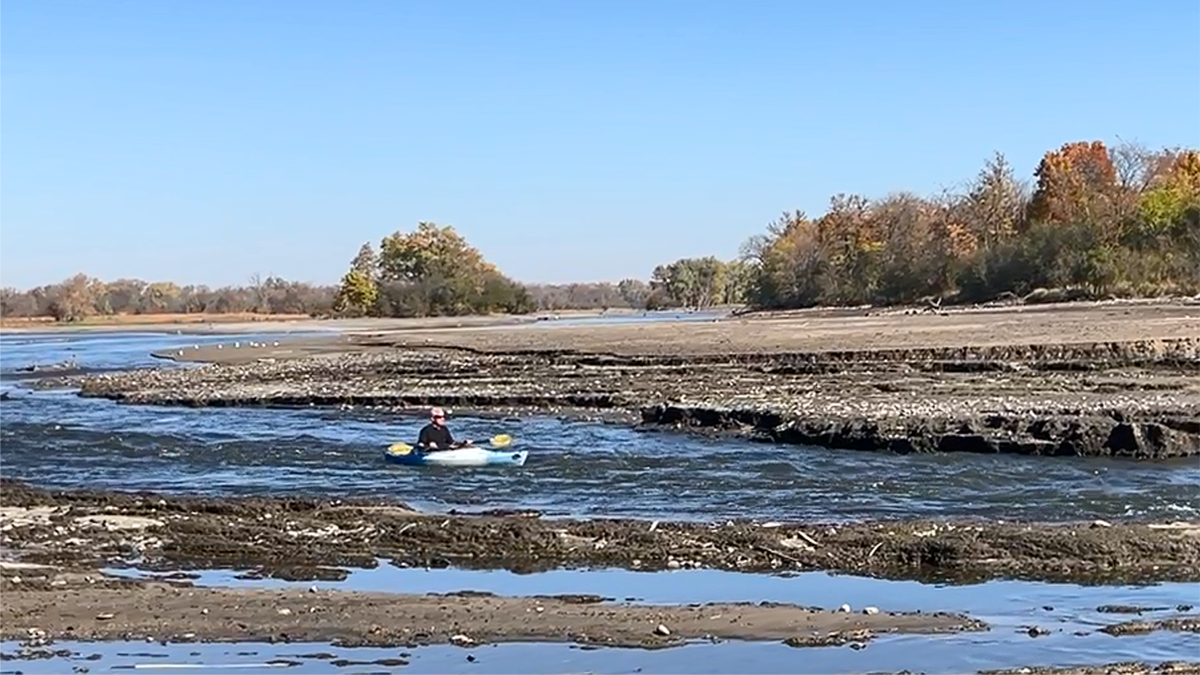
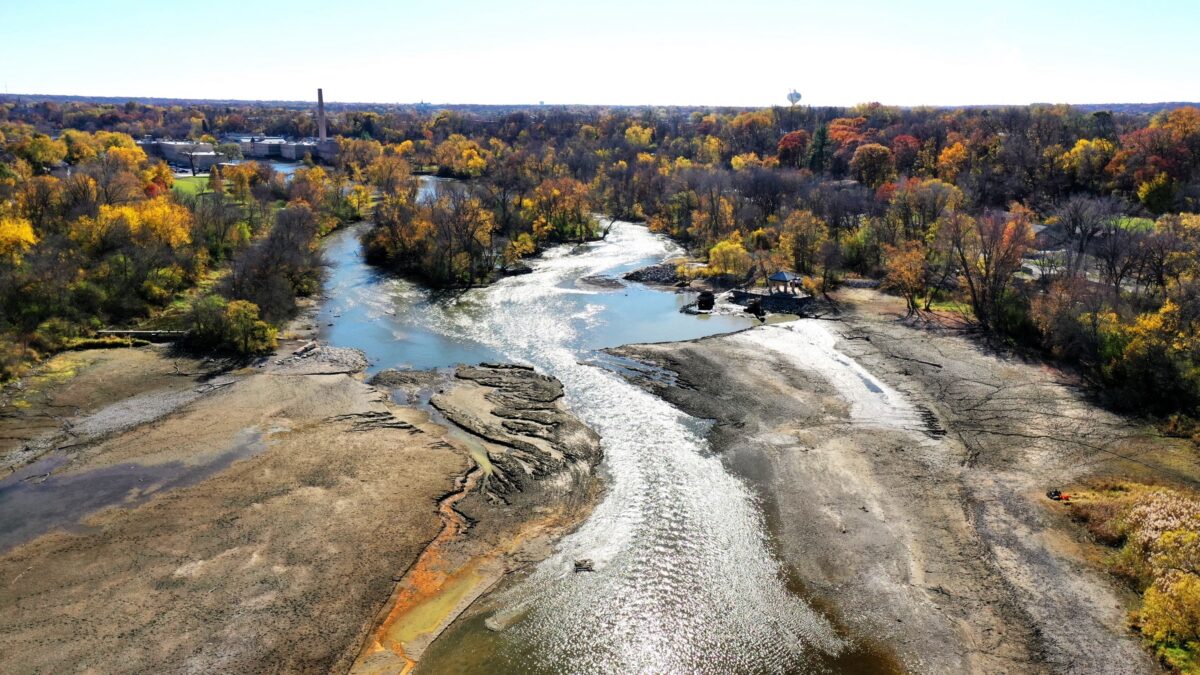
It will likely take a few years before the landscape in Carpentersville has been fully transformed by the free flowing Fox River.
Watch the FOTFR YouTube channel Free the Fox River playlist to see videos of the dam before and during removal. We will be adding post-dam removal videos soon as we watch the “caterpillar turn into a butterfly”.
The Fox should fill out quite nicely above Carpentersville this spring for the inaugural EL CARDUNAL regatta June 22, 2025. The Fox has established her normal low water channel with plenty of depth and room to pass. When the spring rains come we will see the low water channel at the former dam site widen a little further as the river expands over the new beaches for the first time.
Party Plans
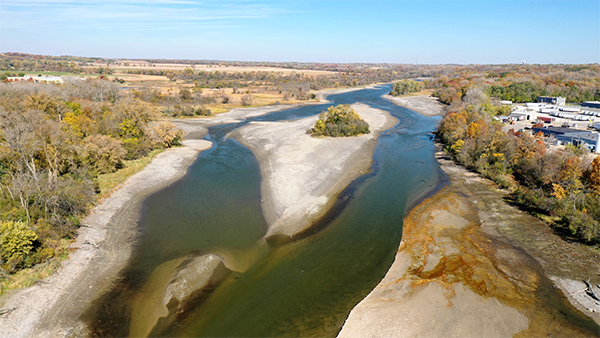
This long-awaited project is not the first dam removal in the watershed, but a demonstration of the very similar removals to follow downstream. The Kane County Forest Preserve District (KCFPD) held a ribbon-tying ceremony to symbolize connecting two sections of the river.
FOTFR has been a dam removal advocate for over 30 years. Expect to see several events associated with this episode in restoration history. Paddle trips, educational exhibits, and other forms of celebration are in the planning stages.
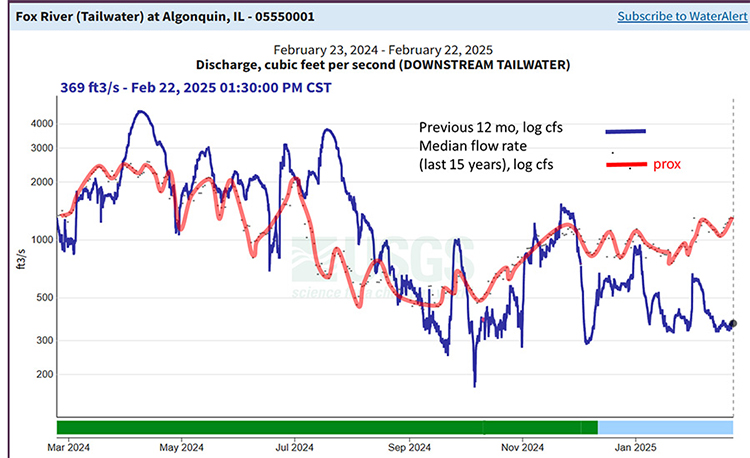
Below is a graph with the 15 year average flow of the Fox River through Carpentersville shown in red, and the actual flow of the river this past year, shown in blue. This gives us a good view into the most likely river conditions to be expected in June. Throughout dam removal in late 2024 and during most of the winter the river flowed less than half normal for that time of the year. Based on the past 15 years data, and using today’s flows as a baseline, we can expect the river flowing for the Regatta to be three to six times what it is today.
Contact us with your celebration ideas and potential partnerships: info@FOTFR.org.
Check out the KCFPD YouTube page for dam removal in action!
Find the latest project information from the KCFPD at: https://kaneforest.com/location/carpentersville-dam
Together, WE keep on fixin’ the Fox!
Removing Dams along the Fox River
- Restores a free-flowing current, reducing sedimentation and algae blooms while improving water quality
- Connects the river, supporting mussel, fish, and amphibian habitats
- Supports the restoration of habitat for native plants, birds, and small mammals along the riverbanks
- Enhances the Fox River’s ability to absorb and filter urban and agricultural runoff
- Provides increased opportunities for fishing, kayaking, canoeing, and the use of small boats
- Removes the danger of drowning at dams
- Allows the Fox River to naturally solve many of the water quality problems we face without creating huge increases in utility bills
- Eliminates the annual operations and maintenance costs of dams

In 2023, The U.S. Army Corps of Engineers (USACE) held three public meetings to discuss the findings of the Tentatively Selected Plan, which recommends the removal of dams in Carpentersville, Elgin, South Elgin, St. Charles, Geneva, Batavia, North Aurora, Aurora, and Montgomery to improve habitat, water quality, and the health of the river in perpetuity.
Click here to see the USACE’s website with its report and recommendations
Thank you to all who offered oral comments at any or all of the 3 public meetings, and also to the over 1000 who submitted a written comment during the 60 day period.
Removing dams along the Fox River restores it to its natural, free-flowing state and reverses centuries of environmental decline

Human activity in the Fox River Valley over the past two centuries has led to steady habitat loss and degradation, fragmentation, sedimentation, the influx of algae and invasive species, and the loss of native plants and animals.
The Fox River Study Group (FRSG), which has conducted extensive water quality sampling and river modeling has found that removal of the dams is the most cost effective means to improve water quality concerns that must be addressed, according to the Illinois EPA. Kane County is a contributing member of the Fox River Study Group.
The FRSG’s findings show there is overwhelming scientific research supporting a solution for reversing the Fox River’s habitat loss, pollution, and the dominance of invasive species. Removing dams along the Fox River restores it to its natural, free-flowing state and reverses centuries of environmental decline.
Learn more about the FRSG by visiting: https://www.foxriverstudygroup.org/river-restoration
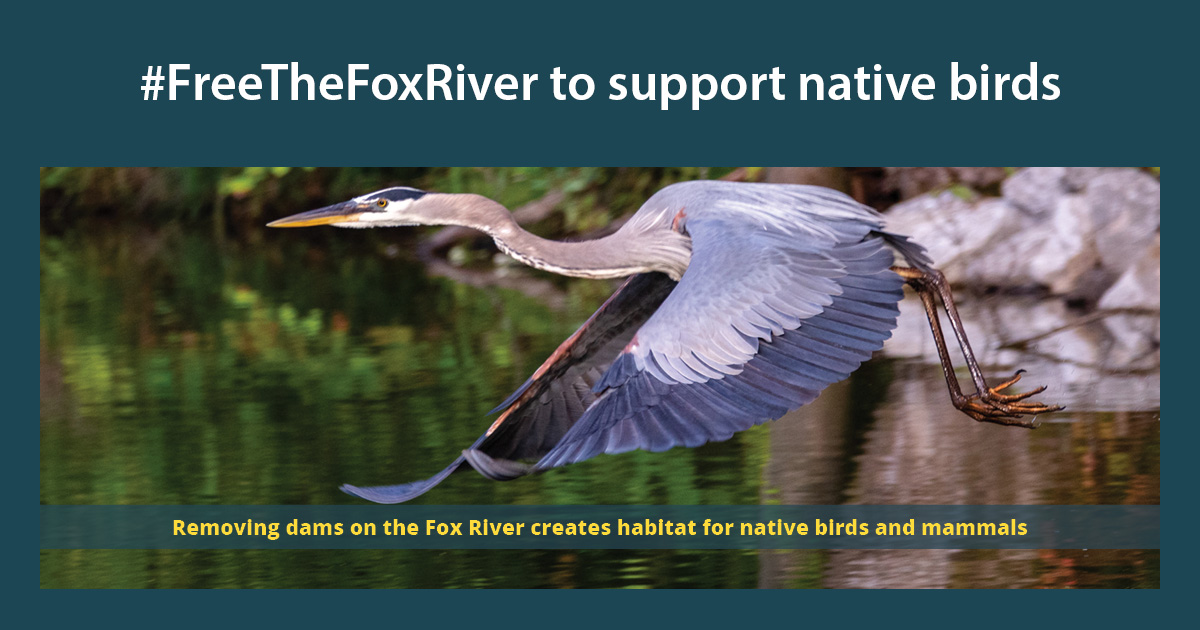
Find the latest information and news about river restoration on social media using these hashtags: #FreeTheFoxRiver #UnDamTheFoxRiver
Together, WE are a strong voice for the Fox River.